What Utility Drone Waivers Cover
On 6 November 2026 we counted the 2,271 waivers on the FAA's public Part 107 waiver list and found 74 held by 35 electric and gas utilities. Of those 74, 70 include 107.31, the rule that the pilot, and any visual observer, must be able to see the aircraft throughout the flight.
Share of FAA Part 107 waivers that include each rule
107.33: the visual observer rules
107.39: flight over people
A third of utility waivers include the visual observer rules, about three times the rate across all waivers. Only one in five covers flight over people, against more than half of all waivers. The waivers point to work along lines and around structures, away from crowds.
The Record a Utility Programme Answers For
Four groups ask a utility drone programme for evidence.
The FAA
An accident that seriously injures someone, or does more than $500 of damage to property other than the drone, has to be reported to the FAA within 10 calendar days. Each FlybyOps flight log holds the pilot in command, crew, aircraft, battery and location, and the waiver can sit on the flight plan or log as an attached permit.
NERC FAC-003
Transmission owners inspect vegetation on the lines the standard covers at least once every calendar year, no more than 18 months apart, and keep the evidence, such as dated inspection records, for three years. Each patrol flight in FlybyOps carries its date, time and location, linked to its project.
Your safety team
Risks are scored on the SORA 5×5 severity and likelihood matrix, with mitigations, owners and review dates. When an incident is filed, admins and the project's managers are notified automatically. On the Business plan, crews can also report incidents anonymously.
Your own auditors
The append-only audit log, on every plan, keeps the history of what changed and who changed it. A flight, risk or incident can't be quietly rewritten after the fact, and changes made through a connected AI assistant are logged under the person's own name.
Contractors Fly Inside Your Record
When a contractor flies for a utility and keeps the flight records in its own system, the utility still answers for those flights. In FlybyOps the contractor works in the utility's workspace instead.
Their lead holds the Operations Lead role. An admin or project manager assigns them to your projects, and from there they add and remove pilots and ground crew on jobs and staff them on flights. They can't invite people to the workspace or add anyone to a project, and they don't see projects they aren't assigned to.
When a contract ends, an admin removes the contractor's people from the workspace in one action. Their access to every project, job, flight and incident ends at once. The flights they logged keep their names, and the audit log keeps their history. Flight approval workflows and contractor access controls come with the Business plan.
Keeping the Fleet Record Current
DJI flights log themselves
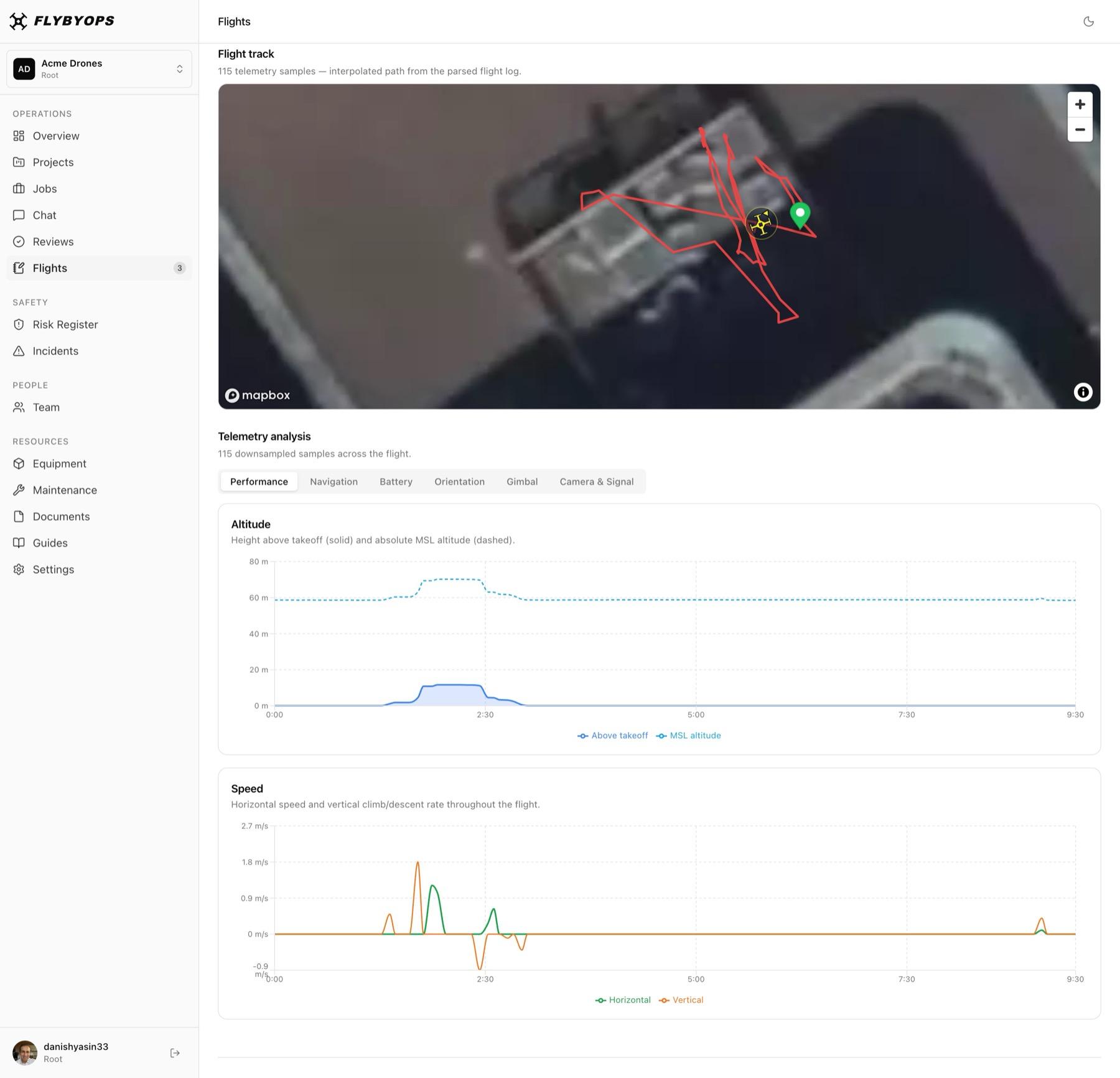
Flight Sync files each flight from a DJI Pilot 2 controller automatically and matches it to the aircraft in the equipment registry by serial number, so flight hours and maintenance schedules stay current.
Dock flights
A flight flown from a DJI Dock uploads to FlybyOps as a DJI flight log, and the dock itself sits in the equipment registry as an asset. Automatic recording of dock flights is planned.
Aircraft and sensors
Each maintenance event adds to the asset's service history: who did the work, what was replaced, the inspection outcome and when the next service is due.
Where FlybyOps Sits Next to Your Other Tools
Utility programmes run three kinds of software: one that flies the aircraft and runs the docks, one that turns images into findings, and one that holds the operational record. FlybyOps is the third.
Frequently Asked Questions
- Does FlybyOps make a utility's drone programme compliant?
- No software can. FlybyOps keeps the evidence in one place. Meeting the FAA's, NERC's or your own requirements stays with the operator.
- Which plan fits a utility programme with several regions?
- Business, from $2,500 per workspace per month, is for multi-site operations with distributed crews and compliance oversight. It adds flight approval workflows, contractor access controls, pilot currency tracking, anonymous incident reporting and API access. Enterprise adds SSO and SCIM, custom retention policies and procurement support.
- Is Part 108 final?
- Not as of 6 November 2026. The FAA proposed Part 108 in August 2025, and the proposal would treat land within 50 feet of powerlines and substations as shielded areas when the infrastructure owner gives permission. Until a final rule is published, Part 107 and its waivers apply.